
The Spice Must Flow—Eventually: Dune: Awakening Got a Tiny Sand-Delay in 2025
Dune: Awakening’s 2025 delay to June resulted from vital closed beta feedback, refining survival mechanics and sandworm physics for a polished launch.
Picture it: early 2025. The hype engines on Arrakis were roaring louder than a sandworm with a toothache. Dennis Villanueva’s movie trilogy had turned casual viewers into hardcore Fremen cosplayers, and survival-game aficionados were sharpening their crysknives for Dune: Awakening. The desert planet, reimagined in an alternate timeline where Paul Atreides was never born, promised a brutal sandbox where Leto Atreides still drew breath and the Harkonnens schemed without a Kwisatz Haderach-shaped wrench in their plans. The devs at Funcom had a shiny early 2025 PC launch on the calendar, and then… May. Wait, scratch that—make it June. A classic case of “the spice must flow, but the build must bake.”
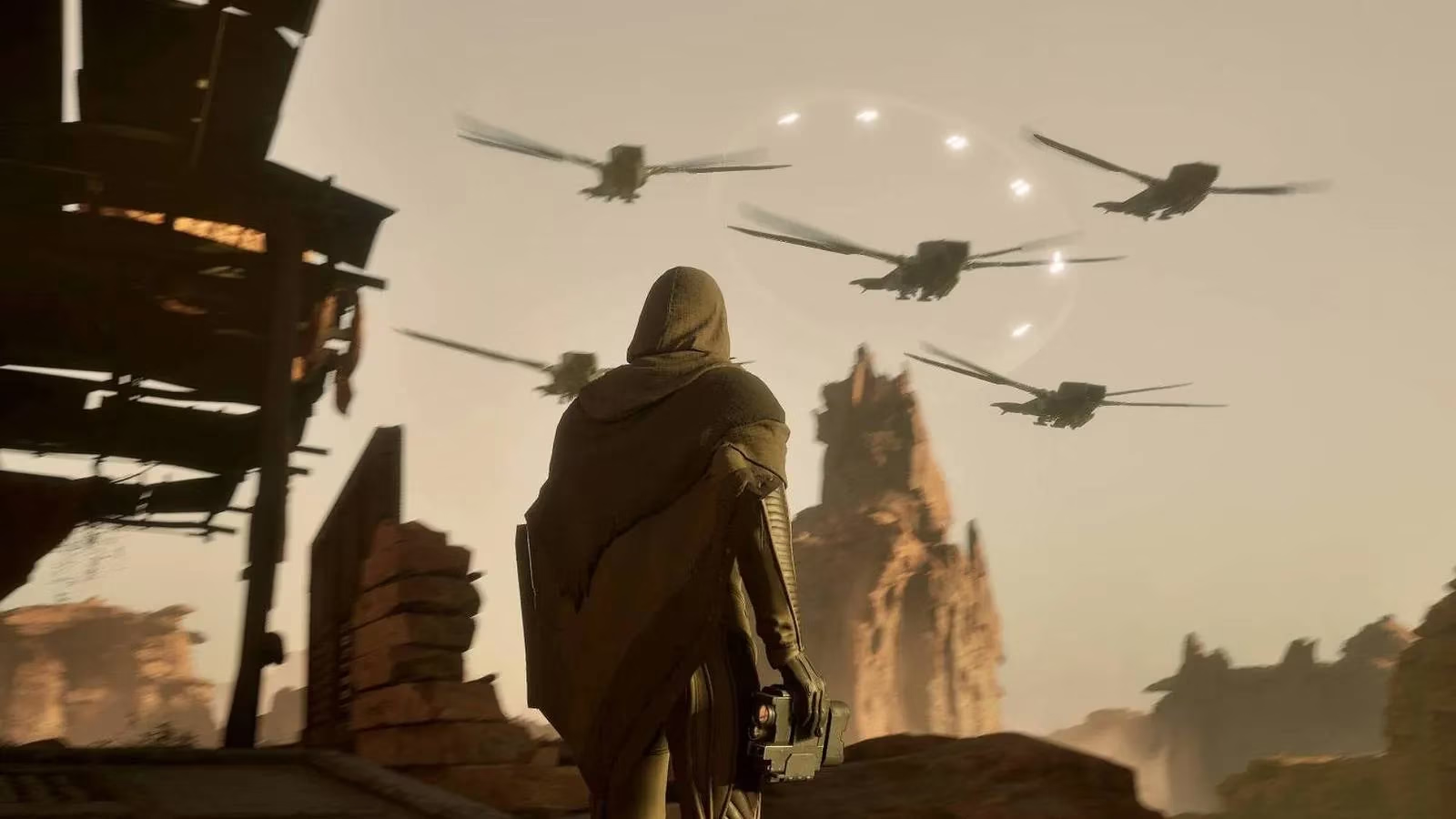
The delay wasn’t some chaotic corporate panic. No, it was a slow, methodical recalibration triggered by a persistent closed beta that, well, delivered more than just positive vibes. On April 15, 2025, Funcom dropped a statement that was part mea culpa, part chef’s kiss: “Thanks to this process, we’ve concluded that with a bit more time to cook, we can act on a lot more of the feedback we know is important to our beta testers.” The new launch date? June 10, 2025—with a head start on June 5 for those who pre-ordered. Three extra weeks. Not a geological era, but in game-dev time, it might as well be an eternity.
What kind of feedback prompted this gentle nudge, you ask? The developers didn’t spill all the spice, but the tone suggested that the beta testers weren’t just complaining about missing facial hair options. Survival mechanics, probably. The sandworm physics, maybe. The way the sun hits your stillsuit—critical stuff. The closed beta, which had been running for a while, clearly generated a mountain of post-it notes. Funcom realized that shipping on the original May date would have meant leaving some significant rough edges exposed to the harsh Arrakis sun, and nobody wants a sand-bleached launch. So, they scheduled a large-scale beta test weekend the following month to triple-check their fixes and gather a fresh wave of community feedback before the final countdown.
The whole situation felt like a rare moment of maturity in the games industry. In a world where delays are often greeted with howls of anguish, Dune: Awakening’s three-week slip was met with a collective, if slightly exasperated, nod. After all, the alternate-universe premise was already a gamble. No Paul Atreides? The Fremen vanished? Leto Atreides still alive and fighting Harkonnens? That narrative tightly coiled demanded a gameplay experience that could sell the weirdness. Releasing it half-baked would have been more painful than stepping on a crysknife.
By 2026, the delay is now a dusty footnote in gaming history, a quaint pre-launch drama that hardcore fans reference with a smirk. Did those three weeks truly transform the game from a potential desiccation into a lush sietch of content? Opinions remain split. Some say the extra polish made all the difference, delivering a survival experience so immersive that you can practically taste the cinnamon-scented air. Others argue that Dune: Awakening still launched with a few sand flea-level nuisances that took subsequent patches to squash. But everyone agrees on one thing: the May-to-June slide was Funcom’s way of saying “we’d rather you love it a little later than hate it on day one.” And honestly, in an industry littered with rushed disasters, that’s a philosophy worth toasting with a cup of recycled bodily water.
So here we are, a year later, with the game finally sitting in our libraries—or in our wishlists, for those still holding out for the ultimate sandworm taming update. The delay of a mere three weeks may not sound epic, but it’s a reminder that even on Arrakis, patience isn’t just a virtue; it’s a survival trait.
Leave a Comment
0 Comments