
The Great Sandworm Purge of 2026: How Dune: Awakening's Most Iconic Threat Briefly Vanished
Dune: Awakening's launch saw the iconic sandworms vanish, creating a brief golden age for base builders before their catastrophic return.
In the unforgiving, sun-scorched expanse of virtual Arrakis, a strange and unsettling quiet had fallen. For the first wave of pioneers who landed on Dune: Awakening during its launch weekend in 2026, the planet felt... wrong. The ever-present, bone-rattling tremors in the sand—the primal warning of an approaching Shai-Hulud—were absent. Players like Reddit user Haloislif ventured deep into marked worm territories, their hearts braced for a confrontation that never came. The iconic giant sandworms, the very soul of Frank Herbert's universe and the apex predators of this survival MMO, had mysteriously vanished from the game. This unexpected reprieve created a brief but golden age for base builders, a period of blissful construction on the open dunes that would prove to be tragically short-lived.
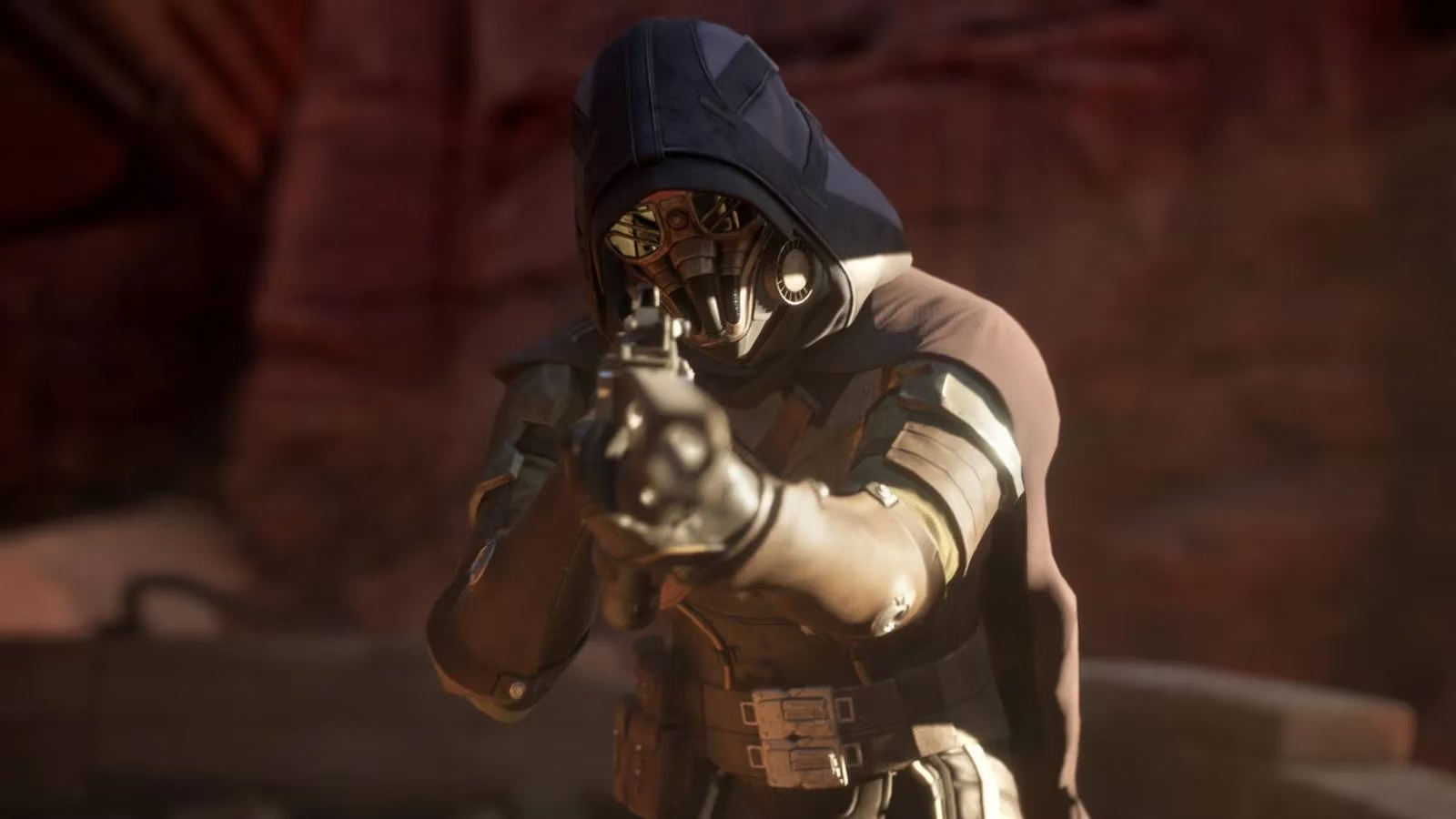
The Calm Before the Storm: A Worm-Free Arrakis
The initial silence was met with confusion and then cautious optimism. On the game's official subreddit and community forums, threads proliferated. Was it a bug? A new, stealthier AI for the creatures? Or had developer Funcom made a conscious, albeit baffling, decision to remove them? For a time, players operated under a new, strange set of rules. The most fundamental law of Arrakis—walk without rhythm, and you won't attract the worm—seemed suspended. Bases sprouted like metal fungi on the open sand, their architects emboldened by the absence of the planet's most colossal inhabitants. It was a developer's sandbox dream and a narrative paradox, a Dune experience stripped of its most essential, terrifying element.
The Devastating Return of Shai-Hulud
The truth, as revealed by community investigation and official follow-up, was far more pragmatic—and terrifying. The worms hadn't been removed for lore reasons; they had been temporarily deactivated by the developers. The reason became horrifyingly clear upon their return. As captured in a now-infamous video by content creator Paddy M, the reintroduced Shai-Hulud were not just back; they were cataclysmic. The footage shows players scrambling into their Ornithopter as the telltale vibrations shake the screen. From the safety of the air, they watch in stunned horror as the gargantuan worm doesn't just attack—it erases. It plows through their meticulously constructed base with the ease of a finger through sand, leaving behind nothing but scattered debris and a few lonely, leaning walls.
"Is that the base gone?" one player asks, voice laced with disbelief.
"Yep," comes the dejected, definitive reply.
This was not an isolated incident. Across the servers, similar stories of total annihilation emerged. The worms' pathfinding and damage mechanics appeared to be malfunctioning, allowing them to devastate player settlements with an efficiency that bordered on the apocalyptic. What was meant to be a dangerous environmental hazard had become an unstoppable, map-cleaning force.
Community Fallout and Developer Balancing Act
The weekend's events sparked a fierce debate within the Dune: Awakening community, highlighting the delicate balance required in a survival game of this scale.
The Pro-Worm Camp (The "Fremen Purists"):
-
Argument: A sandworm should be a force of nature, an existential threat. Building on open sand near their territories should be a high-risk, potentially foolish endeavor.
-
Quote from forums: "If you build your castle on a beach, don't be surprised when the tide comes in. This is Arrakis. The spice must flow, and the worms must eat."
-
Desired Outcome: Worms remain deadly, but their aggression is tied to clearer, avoidable triggers (rhythmic movement, heavy machinery, spice harvesting).
The Anti-Worm Camp (The "Practical Builders"):
-
Argument: Losing dozens of hours of work to a single, unpredictable AI event is not fun or engaging gameplay; it's punitive and discourages player investment.
-
Quote from forums: "There's a difference between a challenging threat and a server-wiping bug dressed up as a worm. My base on solid rock got hit because the worm clipped through the terrain."
-
Desired Outcome: A significant nerf to worm damage against player structures, or the implementation of "worm-proof" foundational building pieces that are extremely costly to make.
The Path Forward: Coexisting with the Giants
By the time this article is published, Funcom has likely reinstated the Shai-Hulud with critical tweaks and fixes. The "Great Purge" of launch weekend will live on in community legend, a cautionary tale about the raw, untamed power of Dune's iconic fauna. The ideal balance, which the developers must now strive for, lies somewhere in the middle. The sandworm must be more than a mere nuisance, but less than an arbitrary reset button on player progress.
The emergent gameplay lessons are straight from the pages of the Dune series itself:
-
Respect the Desert: The planet itself is the primary antagonist. Scout for rock formations, mesas, and canyon walls—natural, worm-impervious terrain—before laying your foundation.
-
Listen to the Sand: The vibration mechanic is your lifeline. It must be reliable and provide adequate warning.
-
Adapt Fremen Wisdom: The game should reward players who adopt Fremen-like behavior—small, dispersed outposts, minimal surface activity, and the use of thumpers as deliberate, sacrificial bait to divert worm attention.
The brief disappearance of the Shai-Hulud in 2026 ultimately served a vital purpose. It proved that without them, Dune: Awakening loses its soul. But their catastrophic return also proved that their implementation must be crafted with precision. They are not just another mob; they are the god-emperors of the desert, and players must learn to live in their shadow—or be consumed by it. The struggle to survive on Arrakis continues, now with a much healthier, and well-earned, fear of the spice-filled deep.
Leave a Comment
0 Comments