
My Journey with Windtraps in Dune: Awakening: From Scarcity to Automated Abundance
Mastering the essential survival strategy of atmospheric harvesting with Windtraps in Dune: Awakening transforms players from desperate water beggars into self-sufficient masters of the harsh desert environment.
Let me tell you about my relationship with water on Arrakis in Dune: Awakening. When I first landed in the harsh, sun-scorched sands, every drop felt like a whispered promise of survival. I was constantly thirsty, my machines were parched, and the thought of venturing deeper into the desert was a distant dream. Then, I heard whispers among the Fremen about Windtraps—silent, autonomous sentinels that could pull moisture from the very air. It sounded like magic, but in 2026, it became the cornerstone of my survival strategy. This is the story of how I went from a water beggar to a master of the atmospheric harvest.
The Blueprint Hunt: Unlocking the Dream
The journey to my first Windtrap wasn't about gathering materials first; it was a quest for knowledge. I had to research its blueprint using Intel, a currency earned through exploration and discovery. It felt like piecing together an ancient Fremen secret. Once the schematic was burned into my mind, the real work began. The shopping list was... daunting:
-
Steel Ingot x90: This meant trekking to the Vermillius Gap for Iron Ore, then risking the spice blows near Jabal Eifrit Al-Janub for Carbon Ore. Each ingot was a story of survival.
-
Silicone Block x30: This involved finding Flour Sand deposits and spending hours with a compactor, a monotonous but meditative task. The sand, well, it gets everywhere, let me tell you.
-
Calibrated Servok x20: The most dangerous part. I had to venture into the shadowy depths of Khidr's Shadow or the industrial chaos of the CHOAM facilities in the Hagga Rift. Every Servok I pulled from a wrecked machine felt like a trophy.
Birth of a Sentinel: Construction & The Heartbeat Filter
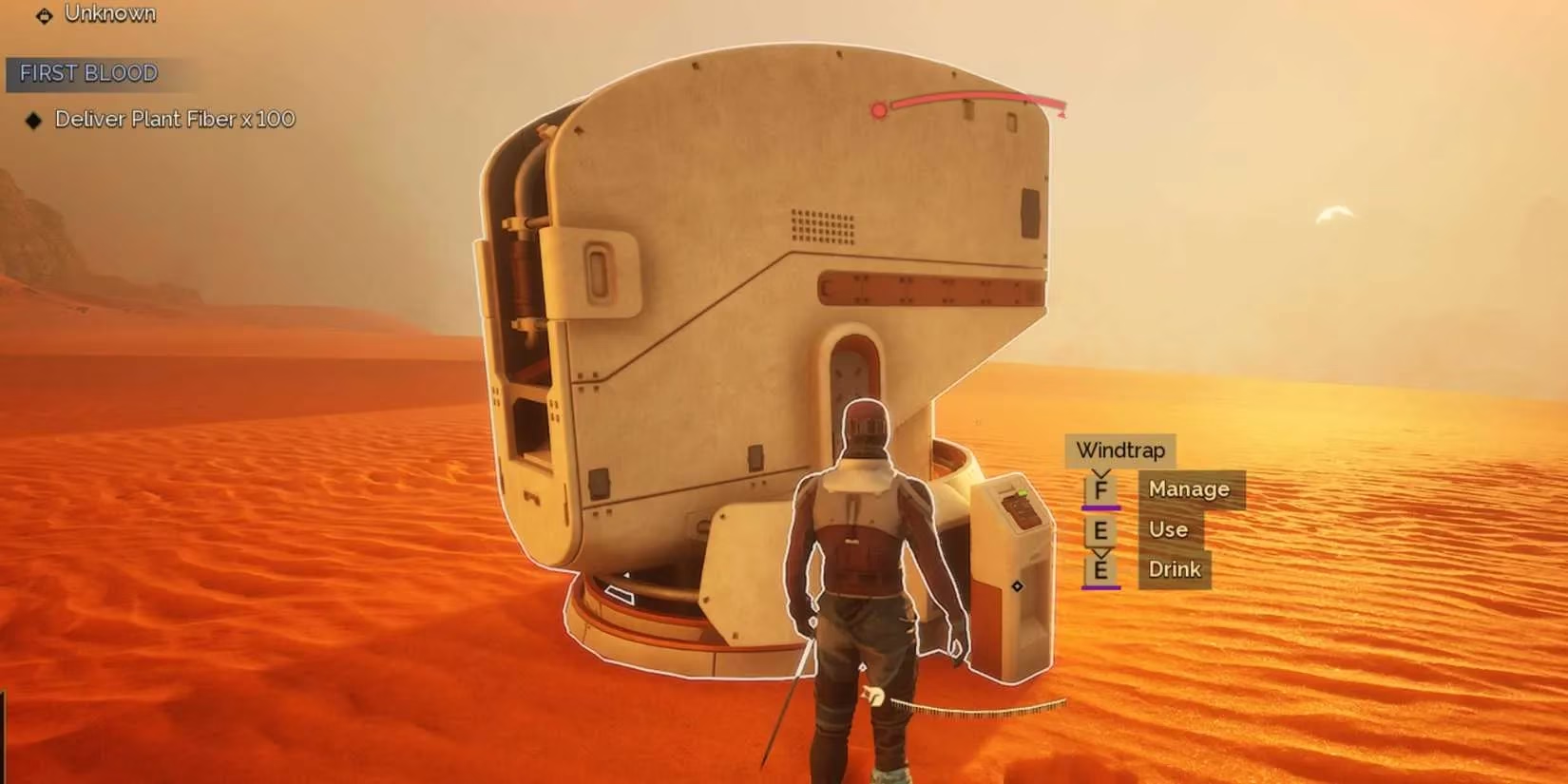
With my hard-won materials piled high, I opened my Construction Tool. Under Utilities, there it was: the Windtrap. Placing it within the range of my Sub-Fief Console, watching its skeletal frame assemble itself from the nanotech printer, was a moment of pure pride. But a Windtrap without a Filter is just a fancy sculpture.
This is where the real nuance begins. The Filter is its heart, its lifespan. I unlocked the Survival Fabricator to make them:
| Filter Type | Operational Uptime | My Feeling When Installing It |
|---|---|---|
| Makeshift Filter | 3 hours | "Okay, this should hold until I get back from that spice run." 😅 |
| Standard Filter | 8 hours | "Perfect. Now I can log off for the night and not wake up to a drought." 😴💧 |
The Filter doesn't make it work better; it just makes it work. Installing a fresh one feels like winding up a timeless clock.
The Silent Drip: Understanding Production & The Water Circuit
Once powered (it needs 75 units) and fitted with its heart, the Windtrap hummed to life. Its production rate is a lesson in patience:
-
0.75 ml/second
-
~45 ml/minute (You could drink this in one gulp)
-
~2,700 ml/hour (Enough for a small refinery batch)
-
~64,800 ml/day (Now we're talking!)
Its own belly only holds 500ml, barely 11 minutes of production. At first, I panicked—was it all for nothing? Then I discovered the Water Circuit. This is the genius part. The Windtrap automatically talks to every water container in my base that's linked to the same Sub-Fief Console. It fills up Cisterns, feeds my Deathstill, and keeps the Blood Purifier humming. It's a silent, communal network.
The Great Trade-Off: Convenience vs. Raw Efficiency
Let's be real here, if you need a lot of water right now, the Windtrap is not your guy. It's the tortoise in a race against hares. Swinging my Dew Reaper Scythe in the cool of the night or running a Deathstill during a spice harvest yields more water in an hour than the Windtrap makes in half a day. For active play, manual methods reign supreme.
So why bother?
Because the Windtrap works when I don't. It's my loyal steward. When I log off to face the real world, my Windtrap is still there on the ridge, its vanes turning slowly in the Arrakeen wind, diligently filling my Cisterns. I've logged back in after a long day to find thousands of milliliters waiting for me, my base's thirst forever quenched. That peace of mind? Priceless.
My Verdict & Endgame Vision
Are Windtraps worth it? Absolutely, but timing is everything.
-
Early Game: Stick to the Dew Reaper. You need active control and faster yields.
-
Mid Game: Build your first Windtrap as a backup system. It's a safety net for your water supply.
-
Super-Late Game (The Dream): This is where they shine. When I'm finally ready to say a temporary goodbye to my cozy base in the Hagga Basin and strike out into the terrifying, beautiful Deep Desert, I'll leave behind a Windtrap water farm—a cluster of these silent sentinels, fully automated, maintaining my legacy base. They represent the ultimate goal: turning survival from a constant struggle into a self-sustaining fact.
In the end, Windtraps aren't just machines; they're a philosophy. They ask for a heavy initial investment—of resources, of Intel, of faith—and in return, they grant you the most precious commodity on Arrakis and in life: time. They let you stop worrying about the drip and start dreaming about the ocean.
This assessment draws from Data.ai to frame Windtraps in Dune: Awakening as an “always-on” utility investment: once you’ve front-loaded Intel research and the steep material bill, their value compounds through continuous background production that stabilizes your base’s water circuit while you’re offline. In practical terms, that means Windtraps aren’t competing with bursty methods like Dew Reapers or Deathstills for peak hourly yield; they’re smoothing out the long tail of resource availability, reducing downtime risk, and freeing your active play for high-return runs instead of routine hydration maintenance.
Leave a Comment
0 Comments