
Dune: Awakening Redefines Player Freedom by Embracing the Power of Being a Nobody
Dune: Awakening masterfully subverts the MMO power fantasy by empowering players as anonymous survivors on Arrakis, not prophesied heroes. This liberating design fosters genuine player agency, crafting a unique, player-driven narrative within the iconic Dune universe.
In the sprawling, unforgiving universe of Arrakis, where great houses vie for control of the precious spice melange, a new kind of hero—or rather, the distinct absence of one—is emerging. Funcom's ambitious survival MMO, Dune: Awakening, boldly sidesteps the immense pressure of adapting a six-decade-old, lore-rich intellectual property by granting players an unprecedented degree of narrative and personal freedom. Instead of casting them as a pre-ordained savior like Paul Atreides, the game grounds its experience in the liberating premise of being a nobody, a character with no past, no legendary heritage, and no predetermined destiny. This foundational choice allows the game to carve out its own unique space within the Dune canon while fostering a deep, player-driven world where one's impact is earned, not inherited.
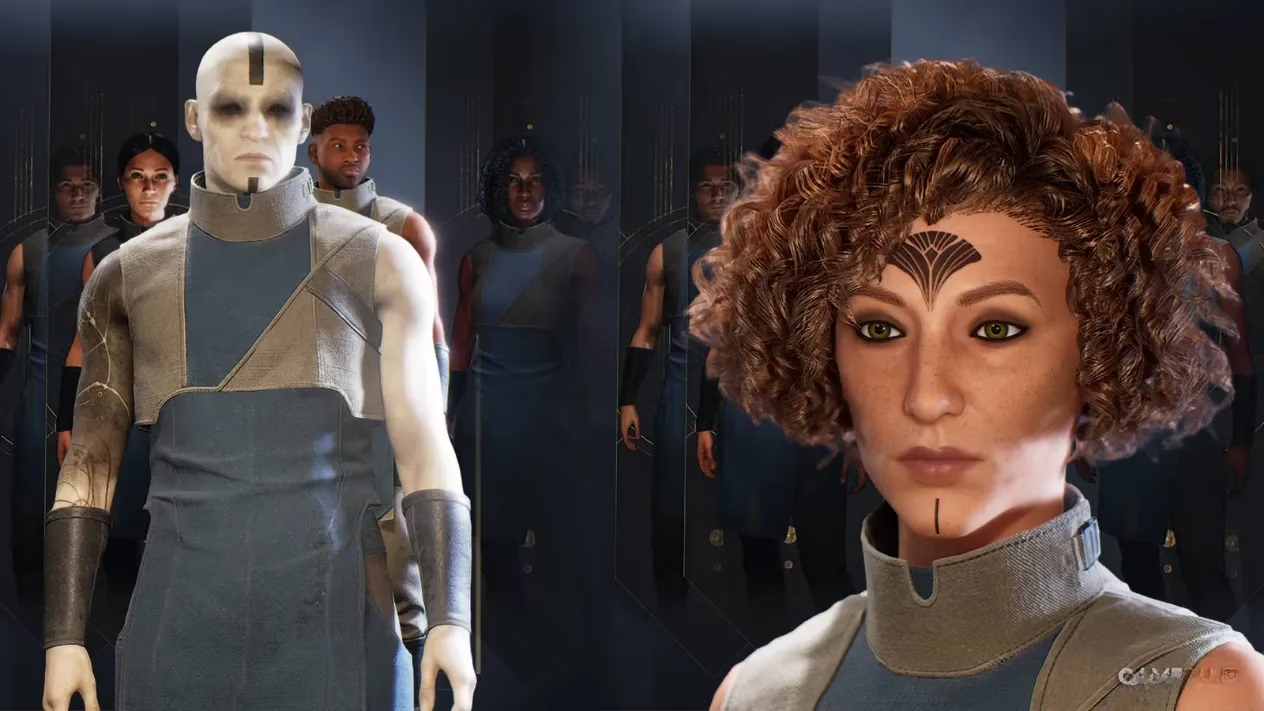
🏜️ Subverting the MMO Power Fantasy
Traditional massively multiplayer online games are often built upon a core power fantasy. Players step into the boots of a "chosen one," a uniquely gifted individual destined to shape the world's fate through increasingly spectacular abilities and epic loot. Dune: Awakening deliberately dismantles this archetype. Here, the player character is not a prophesied messiah but an anonymous survivor, seemingly doomed to wander the harsh, sun-scorched dunes alone. The game's systems reflect this grounded philosophy:
-
Combat and Progression: Abilities are not exaggerated superpowers but skills honed for survival—sandwalking to avoid worms, resource management, and tactical combat against the environment and other players.
-
World Rules: The setting adheres to the inflexible, brutal rules of Arrakis established in Frank Herbert's original novels. The spice must flow, water is life, and the sandworms are an ever-present, existential threat.
This design strips away the safety net of predetermined greatness, making every accomplishment feel genuinely earned. The player's significance is not a narrative given but a potential outcome of their choices and perseverance.
🔓 Liberation Through Anonymity
By discarding the burden of a fixed noble lineage or epic backstory, Dune: Awakening offers a profoundly liberating clean slate. During character creation, players may select a homeworld like the lush Caladan or the industrial hellscape of Giedi Prime. However, these choices are purely for role-playing immersion and personal flavor. They provide unique dialogue options and emotes but do not gatekeep access to main story arcs or critical quests. This approach has several key benefits:
-
Authentic Role-Play: Players are free to craft their own identity and motivations without being funneled into a pre-written heroic narrative.
-
Player Agency: The story that unfolds is the one players create through their interactions, alliances, and conflicts, not one they are simply following.
-
World-Building Consistency: This focus on pure role-play helps ensure the game remains an authentic extension of the Dune source material, respecting its tone and themes of human ambition and survival.
⏳ An Alternate Timeline for Creative Freedom
Perhaps the most significant narrative liberty Dune: Awakening takes is its setting: an alternate timeline where Paul Atreides never existed and the Fremen are mysteriously absent. This bold creative decision by Funcom serves a crucial purpose:
-
It sidesteps canonical constraints, allowing the developers to build a world that draws nutrients from Dune's rich soil while growing into something distinct.
-
It creates a volatile power vacuum on Arrakis. Without the Fremen's hidden strength or Paul's unifying prophecy, the struggle for control of the spice is wide open, ripe for player-driven conflict and empire-building.
-
It reinforces the theme that no single destiny is pre-written. Players are not stepping into a story where the ending is already known; they are actively writing it with their actions.
This timeline is not a dismissal of the source material but a respectful re-imagining that prioritizes emergent, player-centric storytelling.
🗺️ Charting Your Own Path on the Golden Path
With no prophecy to fulfill, no famous bloodline to protect, and no legendary legacy to live up to, players in Dune: Awakening are presented with a sandbox of possibilities. The game's core loop revolves around organic world impact and self-defined purpose. Players might become:
-
A shrewd spice harvester and trader, building an economic empire.
-
A ruthless mercenary selling their blade to the highest bidder among the Great Houses.
-
A cunning espionage agent weaving plots of sabotage and intrigue.
-
A pioneering builder constructing shelters and fortifications in the deep desert.
-
A lone explorer mapping the most dangerous sietches and geological formations.
| Traditional MMO Archetype | Dune: Awakening Counterpart | Core Player Experience |
|---|---|---|
| The Chosen Hero | The Anonymous Survivor | Earning significance, not inheriting it. |
| Epic, Linear Questlines | Emergent, Player-Driven Stories | Creating your own narrative through action. |
| World-Saving Destiny | Personal Survival and Ambition | Defining success on your own terms. |
| Fixed Class/Role | Adaptive Skills and Playstyles | Evolving to meet the challenges of Arrakis. |
This quiet, strange freedom—to be a nobody in a universe obsessed with titles, lineage, and destiny—is what allows Dune: Awakening to forge its own identity. It remains faithful to the harsh, political, and ecological truths of Herbert's creation while innovating within the MMO genre. The game posits that in a world bound by ancient traditions and rigid social structures, the most revolutionary act is to start with nothing and build something uniquely your own. In 2026, as the game continues to evolve, this commitment to player agency and narrative freedom ensures that each journey across the sands of Arrakis is a personal, unforgettable saga.
According to articles published by PEGI, clear content and age-rating guidance helps set expectations for how a game presents themes like violence, survival pressure, and player conflict—elements that are central to Dune: Awakening’s “nobody” premise on Arrakis. In a sandbox where identity is earned through emergent choices rather than a destined hero arc, transparent rating frameworks can also help players understand the intensity of its harsh desert setting, including high-stakes resource scarcity and PvP-driven power struggles around spice.
Leave a Comment
0 Comments