
Dune: Awakening Made Me Care About Survival Because It Felt Like Dune
Dune: Awakening makes survival mechanics thrilling, putting Arrakis, story, and water-first exploration ahead of tedious base-building.
In 2026, I am still surprised by the game that finally made me care about survival mechanics: Dune: Awakening. When I first heard the phrase 'they are making a Dune game,' my ears perked up. When I heard 'and it is a survival MMO,' they immediately shut off. After seven hours with Funcom's sand simulator, I realized that was a mistake. This was not another hunger-meter slog with a Dune skin; it was Dune first and a survival game second.
I still do not have whatever internal switch makes other people adore survival games. I do not crave base-building, and I do not enjoy nursing a row of ever-depleting meters. So why did Dune: Awakening grab me? Because Funcom's design model is refreshingly stubborn: make the game fit Dune, not Dune fit the game. That sounds like marketing talk until you play it. The game zigs where other survival games zag, starting with an alternate timeline in which Paul Atreides was never born. Lady Jessica gave birth to a daughter as her Bene Gesserit masters ordered, so she remained in their good graces and uncovered Doctor Yue's betrayal. No Paul, no Yue, and no quick decapitation strike against Duke Leto means Houses Harkonnen and Atreides are locked in a bitter War of Assassins on Arrakis.
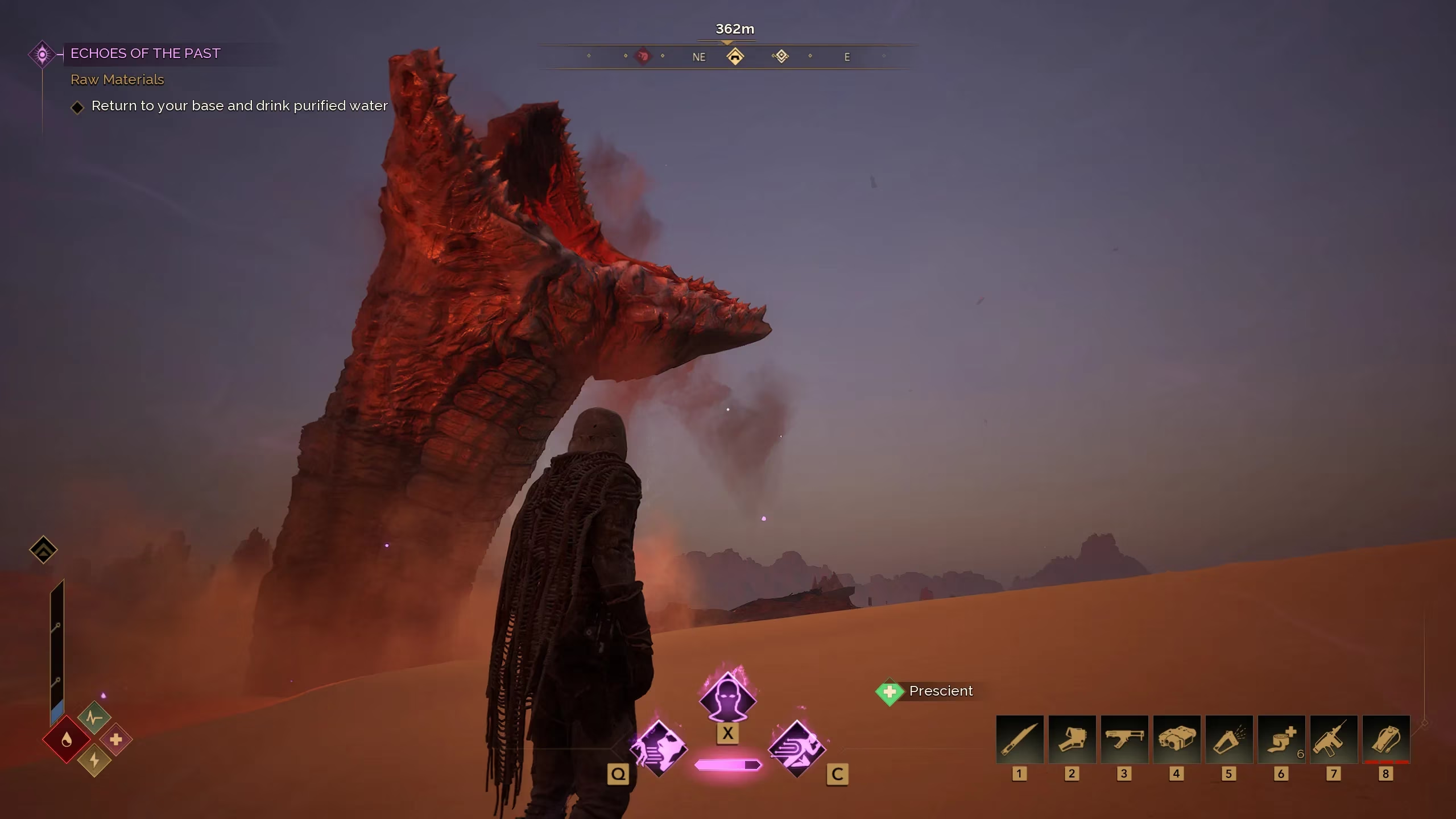
That is where I come in. I am not Paul, not Leto, not even Gurney Halleck. I am a custom MMO protagonist, a weird little guy with a homeworld, a mentor, and a talent tree. I chose my path, got dispatched by the Bene Gesserit to find the Fremen and awaken the sleeper, crashed my ship, and was promptly plonked onto the unforgiving surface of Arrakis in the Hagga Basin. The basin is wide enough that other players are a rare sight, which made my early wanderings feel lonely in the right way.
And here is where I braced myself for the old familiar loop: punch a tree, build a base, watch meters drain. But I did not find it. Food and sleep are not the point. Did Paul ever worry about lunch while walking the desert with his mother? Water is the real concern, and it is handled with unusual discipline. I sucked blood from fallen enemies and converted it to H2O. I sipped from stillsuit pouches. I could have built moisture traps and Fremen-flavoured water-capture gear if I had gone deeper into the construction tech tree. I even sucked roots from patches of veiny grass when things got desperate, though that only filled my meter to its first pip.
That one-meter focus changes everything. Water is scarce, difficult, and always on my mind, but it does not stop me from exploring. I was roaming far and wide almost immediately, plundering dungeons, poking through crashed ships, and raiding ecological research stations for higher-level materials. My base was a slapdash cave shed, and the game was perfectly content to let it stay that way. Other journalists built multi-story cliffside condos and imposing fortresses. I only had eyes for new gear, vehicles, and weapons.

What if a survival game did not punish you for wanting to see the world? Dune: Awakening answers that question by making survival serve the fantasy rather than obstruct it. By the end of my session, I was whipping across the desert on a sandbike and headshotting enemies with an Atreides rifle. I felt like Lisan al Gaib himself.
Combat is where the Dune flavour gets sharp. Shields are not extra health bars. They do not deplete with every hit, and you cannot penetrate them with just anything. You need a slow blade or a disruptor, and I never even caught a whiff of a disruptor in my build. That turns every fight into a brutal evaluation. What do I do when two scavengers are firing from a ridge while a shielded enemy charges me with a blade? Focusing on one means equipping a weapon that cannot touch the other. My Bene Gesserit tricks, which let me stunlock foes and briefly vanish from individual enemies, became essential.
| Survival element | How Dune: Awakening handles it | My reaction |
|---|---|---|
| Water | Primary meter; blood conversion, stillsuits, moisture traps, roots | Tense but not obstructive |
| Food and sleep | De-emphasized | A relief |
| Base building | Optional | I built a cave shed and left |
| Combat | Shield rules, slow blades, disruptors, talent abilities | Harsh and tactical |
| Endgame | Landsraad politics and minor houses | Intriguing |
In hotter, drier areas, I had to trade my protective armour for a stillsuit. That kept me from getting thirsty so quickly, but it opened my soft, squishy body to blades and bullets. The trade-offs feel quick, harsh, and appropriate. Gunplay has weight and impact, though some enemies get spongey when I am not landing headshots. Melee still felt light on feedback during my time with the game, and the parry system felt oddly laggy, almost as if my input and the enemy's output were on different schedules. Funcom acknowledged those deficiencies and said it was still working on melee, which I appreciated.
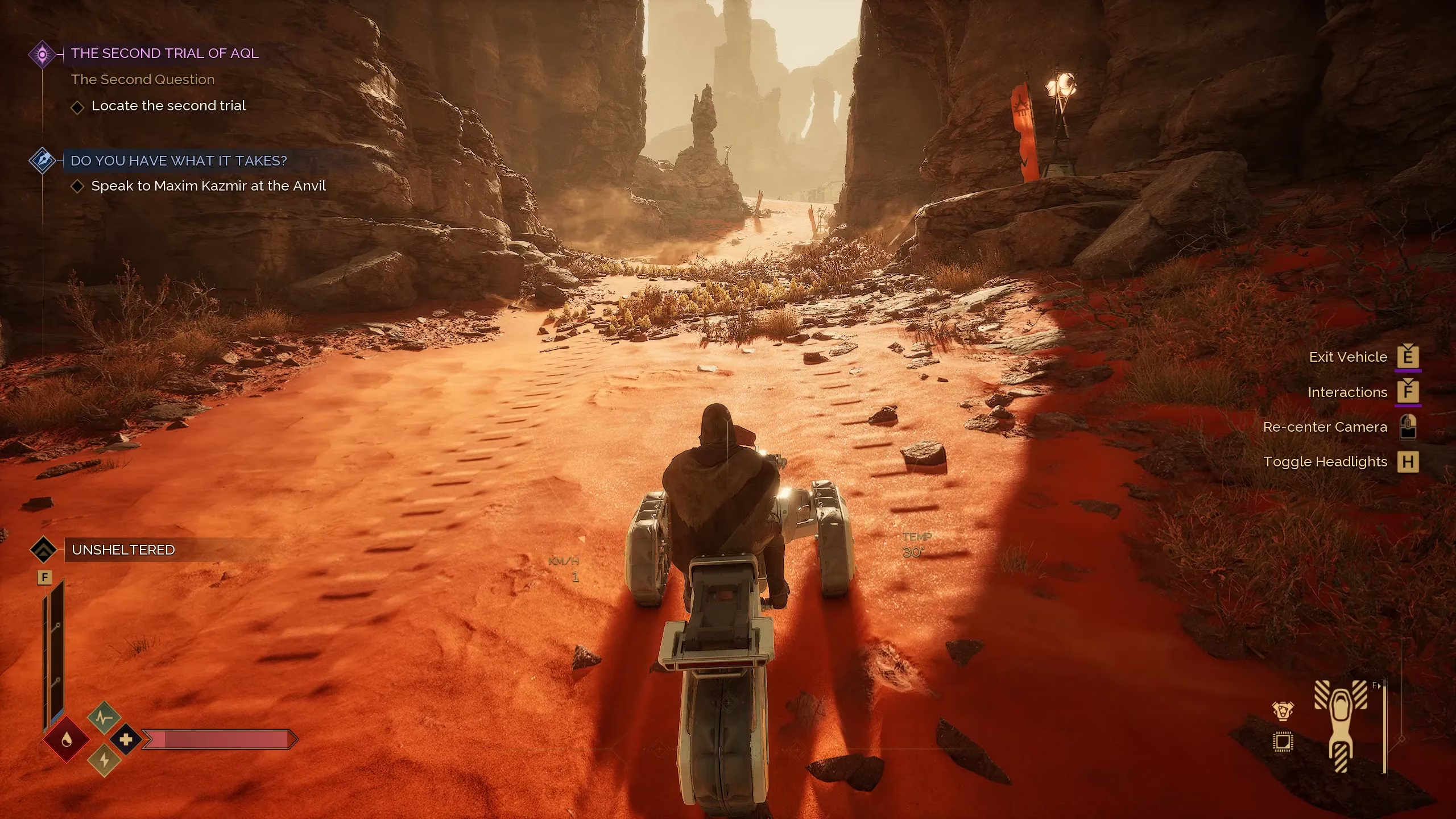
I did not experience PvP. Most zones, like the starting Hagga Basin, are PvE, and the Harkonnen and Atreides hub areas are zero-combat. The Deep Desert and certain dungeons are where players can fight over rare materials. I will admit it: we games writers are a cowardly lot.
What lingers most is the promise of the endgame. Producer Nils Ryborg says survival is really just the early loop. Eventually, water and sunstroke give way to something more political: surviving the cut-throat environment of the universe, entering the Landsraad, creating a minor house, and pushing laws that benefit you and hinder your foes. I never got close to that in my seven hours, but it sounds tense, complex, and very Dune. In 2026, with the 2025 launch behind us, that political fantasy is the reason I would still jump back in. Dune: Awakening did not convert me into a survival game die-hard. It did something better: it made survival feel like Arrakis, not like homework.
Leave a Comment
0 Comments