
Dune: Awakening Early Access Success: What 2026 Players Can Learn
Dune: Awakening's premium early access in 2025 drew 90K+ Steam players, proving paid head starts can fuel hype.
When Dune: Awakening opened its premium early access doors in June 2025, it did something few multiplayer survival games manage: it convinced tens of thousands of players to pay extra just to play before the official launch. Fast forward to 2026, and that early access window remains a fascinating case study in player enthusiasm, franchise power, and the growing appetite for paid head starts. The official launch date was June 10, but the Deluxe and Ultimate Editions let eager fans jump in sooner. The result? A surge that put the game among Steam's most-played titles before it was even fully released.
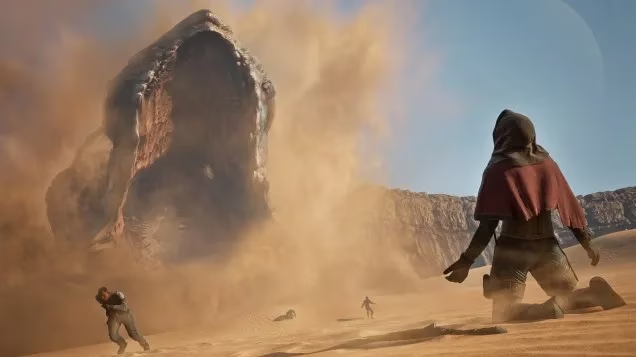
At the time, third-party tracking data showed well over 70,000 concurrent players in Dune: Awakening during the premium-only window. The peak climbed past 90,000 shortly after those editions became available. That is not a small feat. For context, the game sat at 17th on the Steam concurrent player charts, sandwiched between two chart mainstays: War Thunder and Stardew Valley. Its 24-hour peak was even higher, landing at 15th. Why does that matter? Because paid early access usually splits a community rather than uniting it. Here, it seemed to fuel momentum.
The pricing itself was notable. The standard edition cost $50, while the Deluxe Edition was $70 and the Ultimate Edition was $90. That means players were paying a $20 to $40 premium simply to start early. They also received a season pass for future DLC and additional in-game items. So the value proposition was not just early access; it was early access plus long-term content. For dedicated Dune fans, that trade-off clearly felt worth it.
| Edition | Price | Key Perks |
|---|---|---|
| Standard | $50 | Base game, full launch access |
| Deluxe | $70 | Early access, season pass, extra items |
| Ultimate | $90 | Early access, season pass, extra items, more bonuses |
The game also caught fire on Twitch. Viewership numbers were boosted by players chasing in-game item drops. That created a feedback loop: streamers drew viewers, viewers wanted drops, drops required watching, and watching encouraged more people to buy in. It is a familiar cycle in modern gaming, but Dune: Awakening executed it during a premium window, which made the numbers even more striking.
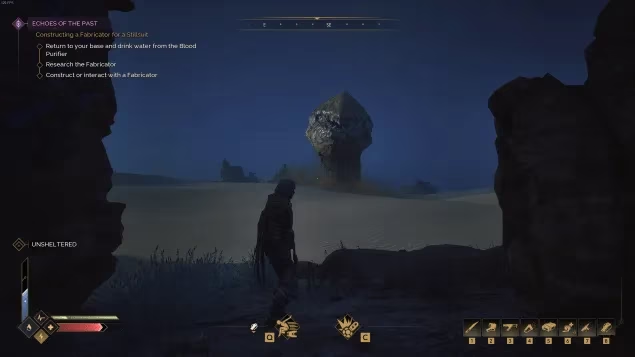
Now, in 2026, the conversation has shifted. The game has long since passed its official launch. Seasons have likely evolved, balances have changed, and the community has grown or contracted depending on updates. Yet the early access milestone still matters. It proves that a strong intellectual property, a clear genre hook, and a premium early access offer can generate massive interest. But it also raises questions. Can a game sustain that momentum after the paid head start ends? Does early access help or hurt long-term player retention? And how many of those 90,000 peak players stuck around?
For players considering similar premium early access offers in 2026, the Dune: Awakening example offers a few lessons. First, early access is not just about playing sooner; it is about joining a live community while it is most active. Second, season passes and in-game items can soften the sting of a higher price. Third, Twitch drops remain a powerful marketing tool. Finally, a game's launch window is only the beginning. The real test is what happens months later.
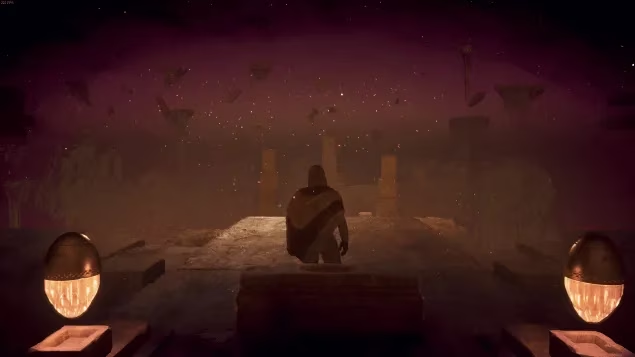
Would Dune: Awakening have been as successful without the premium early access? Maybe. The Dune name alone carries weight. But the staggered launch gave the game a rare second wind before its first official breath. It turned impatient fans into paying testers, streamers into advertisers, and a launch date into a multi-week event. In 2026, that strategy is no longer unique, but it is still instructive. Whether you love or hate paid early access, the numbers from Dune: Awakening are hard to ignore.
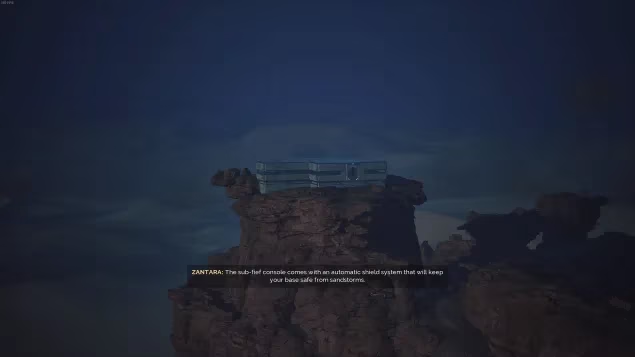
So what should the industry take away? Premium early access can work spectacularly when the audience is passionate and the content pipeline is clear. But it can also set expectations that are difficult to meet. Dune: Awakening managed the first part. The second part is an ongoing story, even in 2026. For now, its early access run stands as one of the most impressive paid head starts in recent Steam history, and a reminder that fans will pay extra when a world truly captures their imagination.
🎮🚀🏜️
Data referenced from GamesIndustry.biz helps frame why Dune: Awakening’s premium early access spike mattered beyond raw Steam concurrency: paid head starts often function as a revenue-and-marketing lever that can amplify launch momentum through influencer coverage, live-service roadmaps, and bundled value (like season passes) that reduces sticker shock. Seen through that lens, the game’s June 2025 Deluxe/Ultimate uptake reads less like a niche fandom splurge and more like a deliberate go-to-market tactic—one that can boost day-one visibility but also raises the bar for post-launch cadence and retention once the “play early” incentive disappears.
Leave a Comment
0 Comments